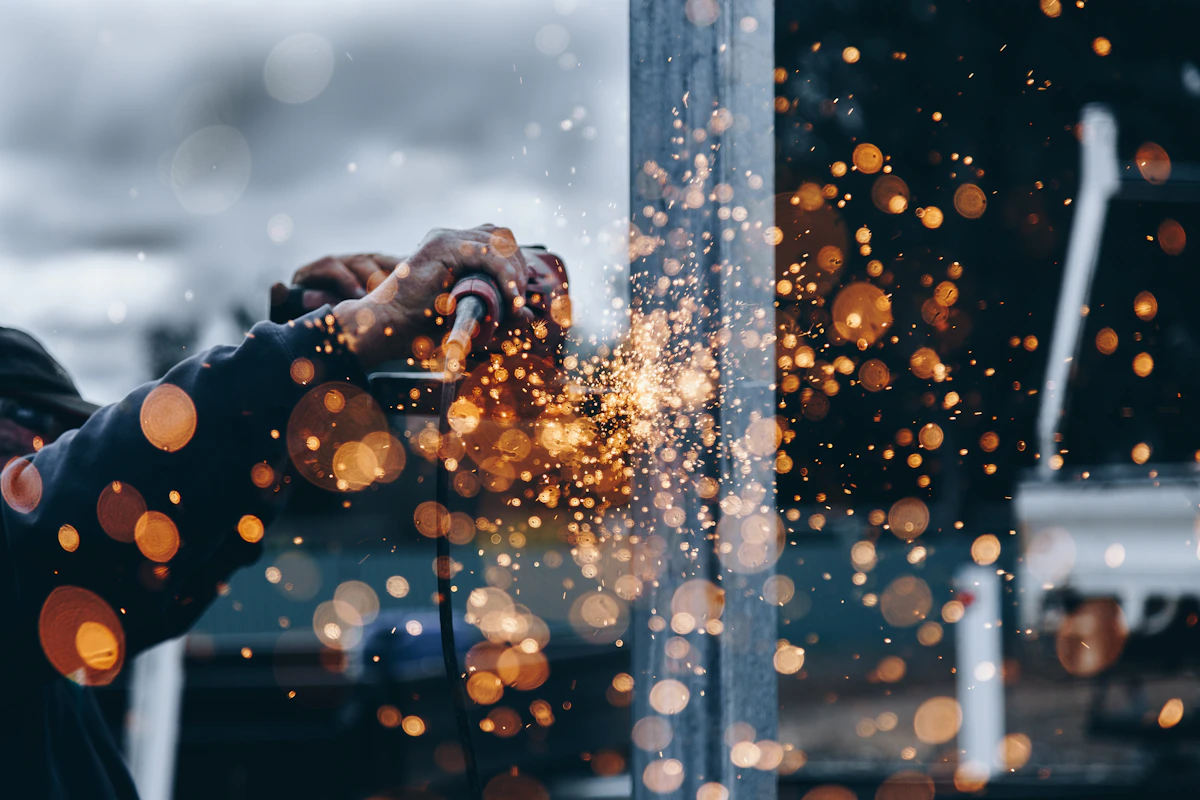
Practical guidance for on site welding repairs—what to expect, how to prepare, common materials and safety considerations before calling CLT Mobile Weld Repair.
If you need on site welding for a trailer frame, gate, railing or structural repair, knowing what to expect before a technician arrives saves time and reduces surprises.
When to choose on site welding
On site welding is best when the part or structure is heavy, bolted into place, or the cost and disruption of moving it to a shop would be high. Examples include a broken trailer frame at a jobsite, a damaged commercial gate that controls access, or a railing with loose connections on a multi-story building exterior.
How to prepare for an on site welding visit
Good preparation speeds up repairs and helps the welder give a more accurate estimate. Before you call, gather these details:
- Describe the material (steel, stainless, aluminum) and approximate thickness.
- Note whether parts are painted, galvanized, or behind protective coatings.
- Tell us the location and accessibility: flat ground, tight alley, driveway, or elevated work area.
- Provide photos or short videos showing the damage and surrounding conditions.
- Flag any hazards such as fuel tanks, compressed-gas cylinders, or electrical equipment nearby.
Example: "Trailer A-frame cracked near the hitch, 3/16 in. steel, parked in a covered lot with 10 ft clearance overhead." That kind of detail is useful.
Site conditions and access considerations
Mobile welders bring tools and equipment to you. Safe, level parking within 25–50 feet of the work area helps. If the job requires lifting, confirm whether there’s room for a hoist, jack, or scaffold. If access is limited, plan for a short walk carrying gear or ask about moving the item a few feet if possible.
Power and lighting
- A secure 120V receptacle is often useful for grinders, lights, and battery chargers.
- For evening or shaded work, portable lighting is required; confirm availability ahead of time.
Equipment, consumables, and common processes
Mobile welding commonly uses stick (SMAW), MIG (GMAW), and TIG (GTAW) processes depending on material and the required finish. A typical mobile rig will carry:
- Multi-process welding power sources and generators when shore power isn’t available.
- Grinders, cutting tools, clamps, jacks, and portable lighting.
- Consumables: electrodes, wire, filler rods, shielding gas, and consumable cutting discs.
- Personal protective equipment (PPE) and fire suppression tools.
Tradeoffs: MIG is fast for carbon steel, stick works well outdoors and on dirty surfaces, and TIG gives a neat finish on stainless or thin aluminum but is slower. Expect the technician to recommend the process that balances strength, appearance, and cost.
Materials and repair examples
Different metals require different approaches. Here are typical scenarios:
- Trailer frame crack: Often beveled and welded with matching filler; may require reinforcement plates for long-term strength.
- Gate hinge/leaf weld failure: Remove paint at the joint, weld and grind, and consider bolt reinforcement or gussets for high-traffic gates.
- Railing post loosened at base plate: Check anchorage and surrounding concrete; plate repairs or new anchoring hardware may be needed.
Example: Replacing a torn trailer crossmember may involve temporarily supporting cargo, cutting out the damaged section, fitting a new member, and welding both sides to restore alignment.
Structural and code considerations
Some repairs affect structural safety or fall under local building codes. In those cases, an on site welding repair may need engineering review or an inspection. CLT Mobile Weld Repair can advise whether an engineered solution or permit is likely required, but final approval rests with the project engineer or local authority.
Safety and risk management
On site welding carries fire and burn risks, fumes, and electrical hazards. Reasonable safety steps include clearing flammable materials, providing ventilation for enclosed spaces, and using proper PPE. If cutting or welding near fuel tanks, hydrants, or electrical conduits, communicate those hazards in advance so the welder can plan appropriate controls.
How quotes and timelines work for on site welding
A clear inspection is the first step. Many repairs can be estimated from photos, but final pricing usually requires a short on-site assessment to confirm access, material condition, and scope. Estimates should list labor, materials, and any access or site-mitigation costs. Expect adjustments if hidden damage appears during work.
What you should ask for
- Written estimate with scope, materials, and whether post-repair grinding or painting is included.
- Clear note about any conditions that could change the price, such as additional rust or hidden cracks.
- A description of cleanup and waste disposal procedures.
When to call CLT Mobile Weld Repair
If the job is heavy, bolted in place, in-service equipment, or the cost/time to move it to a shop is prohibitive, on site welding is a practical option. Contact CLT Mobile Weld Repair to discuss scope, send photos, and schedule an inspection. We serve Charlotte and surrounding areas and can explain likely approaches without promising a particular outcome until we see the job.
Learn about our service area and services and have photos ready to speed the process.
Contact CLT Mobile Weld Repair
Conclusion: On site welding can save time and money when moving an item is impractical, but success depends on material, access, and scope. Prepare photos, describe site conditions and hazards, and ask for a clear written estimate and scope before work begins.
