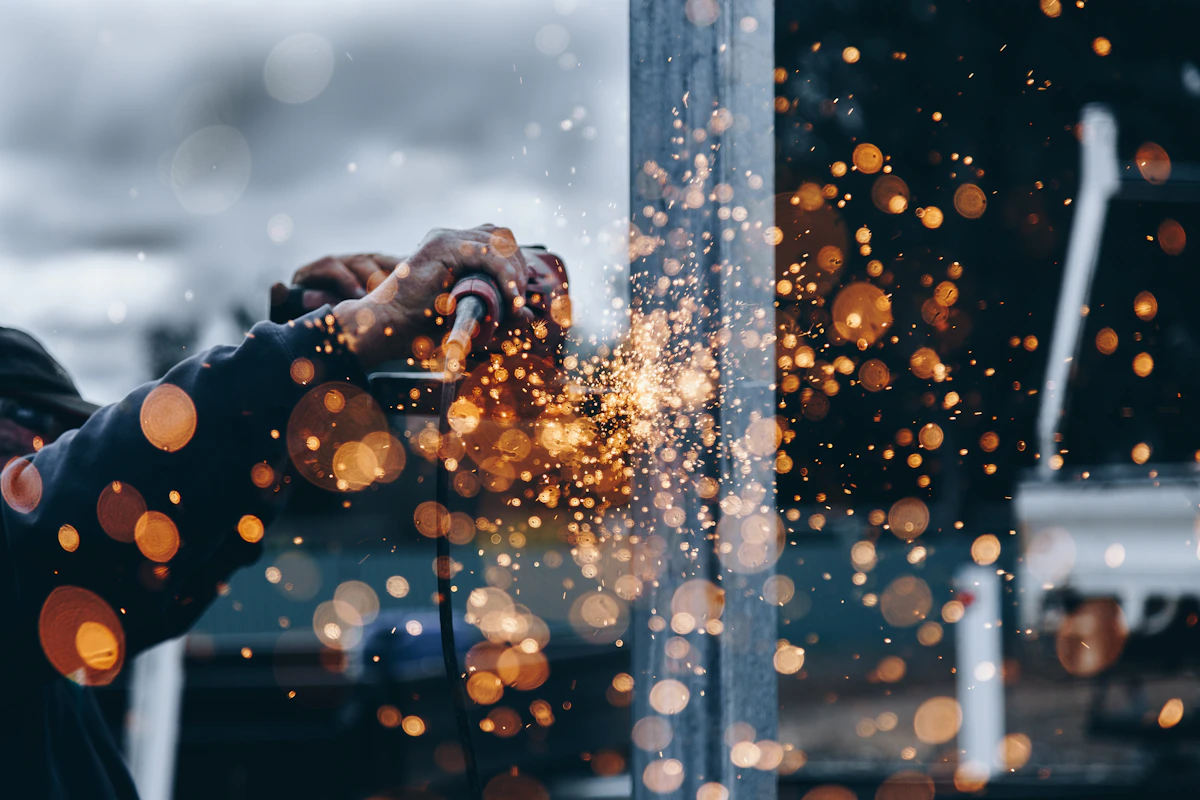
Practical on-site welding services and site-prep advice for Charlotte property owners, fleet managers, and contractors.
Welder Near Me Mobile is a common search for property owners and fleet managers who need on-site repairs in Charlotte and nearby areas. Mobile welding can save time and reduce downtime, and knowing what to expect and how to prepare helps the technician work faster and safer.
Welder Near Me Mobile: how mobile welding differs from shop work
Mobile welding brings the tools to your location instead of moving parts to a shop. That changes logistics and creates tradeoffs, so plan accordingly.
- Advantages: less moving of heavy items, faster return to service for vehicles and gates, and on-site assessment of the installation.
- Limitations: limited bench fabrication space, weather and light conditions, and access or safety challenges on-site.
Common mobile welding jobs in Charlotte
Mobile welders typically handle a mix of residential, commercial, and light-industrial work. Typical jobs include:
- Trailer tongue and frame crack repairs (for example: a cracked trailer A-frame)
- Gate and hinge realignment or reinforcement
- Railing repair and patching for stairs or balconies
- Small fabrication like custom mounting brackets or equipment stands
- Field repairs to restore limited function until shop work is feasible
What to know before you call
Before scheduling a mobile welding visit, gather these details so the welder can assess needs and bring the right equipment. In addition, good information speeds diagnosis and reduces return visits.
- Material type: is the broken piece mild steel, stainless, or aluminum?
- Approximate size and thickness: thin sheet metal needs different settings than structural tubing.
- Accessibility: is the work at ground level, on a roof, under a vehicle, or behind a gate?
- Photos: clear images from a few angles help determine whether an on-site repair is likely or whether shop work is needed.
- Power and space: is there an outlet nearby, and is there a safe area for the welder to work?
Preparing the site for safe, efficient repairs
Preparing the area reduces time on site and improves safety. Therefore, clear the work zone and give the technician stable footing.
- Clear the immediate work area of vehicles, debris, and tripping hazards.
- Provide stable footing — a level pickup or concrete pad is ideal.
- Move combustible materials away or cover them if possible.
- Turn off nearby equipment and isolate batteries or fuel sources when repairing vehicles or trailers.
- Plan for traffic control if the repair is near a driveway, road, or busy loading area.
Materials, processes, and equipment a mobile welder might use
Mobile welders often bring a selection of welding processes to match the job. For example, a different process is chosen for aluminum than for mild steel.
- MIG (wire-feed) — good for steel repairs and quick patching on-site.
- TIG — used for thin metals and cleaner stainless or aluminum work when precision is needed.
- Stick (SMAW) — useful outdoors or on rusty structural parts where shielding gas is impractical.
- Grinders, plasma cutters, clamps, and portable jigs for fit-up and prep.
Example: repairing a gate hinge on-site may require cutting out corroded metal, welding in a reinforcing plate with MIG, and grinding to restore clearance; however, the exact sequence depends on inspection.
Structural considerations and when inspection or engineering is needed
Repairs on load-bearing items, safety railings, or structural trailer frames may require more than welding alone. Ask whether the part carries structural loads or affects code requirements, because an on-site weld may be only a temporary measure.
Do not assume a quick on-site weld restores original capacity — an inspection will determine if reinforcement, gussets, or replacement members are needed.
Safety, permits, and compliance
Mobile welders follow site safety practices, but customers should also be aware. In addition, confined-space rules, hot-work permits, or facility contractor requirements may apply in industrial settings.
- Confined-space rules, hot-work permits, or facility contractor requirements may apply in an industrial setting.
- Local building codes can affect railings, stairs, and certain structural repairs — ask whether permits are required for your location.
- Always plan for a post-repair inspection when work affects life-safety components or regulated equipment.
Insurance and liability
Confirm that any contractor you hire carries appropriate liability insurance and understands site-specific rules. A mobile weld repair typically requires clear communication about risk, site rules, and who will remove or secure surrounding materials.
Typical timeline and realistic expectations
Small bracket or hinge repairs are often completed in a few hours on-site. More complex jobs — like trailer frame sections or full gate replacements — can require parts, shop time, or engineered repairs and may take days to weeks.
Use photos and measurements to get a better estimate before the visit, because upfront detail often reduces follow-up work.
Questions to ask a prospective mobile welder
- Can you describe how you would approach this specific repair?
- What process and filler material do you plan to use for the metal type?
- Will the repair restore the original function or is this a temporary field fix?
- Do you need permits or special site access for this work?
These questions help you understand the tradeoffs between a quick on-site fix and a more durable shop or engineered solution.
When to contact CLT Mobile Weld Repair
If you’ve got a trailer with a cracked tongue, a gate pulling away from its post, a railing with loose connections, or a fabrication need that’s difficult to move, an on-site evaluation is a practical first step. Send clear photos, indicate material type when known, and describe site access so the technician can prepare appropriately. For more details about our approach and typical services, see our service information at CLT Mobile Weld Repair.
Contact CLT Mobile Weld Repair
Mobile welding solves many convenient, timely repairs but isn’t a substitute for engineered solutions when safety or code concerns are at stake. Finally, an on-site inspection will clarify whether a mobile weld is appropriate and what next steps will ensure a safe, lasting outcome.
